At The Pool - Listening and Language Tips For Kids With Hearing Loss


Summer and swimming go hand in hand for many families with young children. The opportunity for maximizing listening and spoken language LSL learning is immense for water-loving families. Early each summer, I guide parents as we brainstorm LSL goals to target with their child while enjoying the pool and related activities. The children’s ages and goals dictate the activities and strategies. I also help families understand and take advantage of water-resistant hearing technology and related gear/equipment.

For home-based LSL intervention, the backyard plastic pool is equally as effective as play-based clinic therapy with a container of water and pool-themed manipulatives. I am fortunate to have a Fisher-Price Little People pool. Countless children have loved listening, learning, and playing with this set over the years. I recently saw that this pool is available on ETSY for only $129.93 😳 . My husband says, SELL IT! but that’s not going to happen!

TALK-ABOUTS for listening, vocabulary and language expansion

  • Packing a bag to go to the pool or grabbing a suit, towel, and toys for the backyard

  • What’s goes in the pool bag? (Towels, sunscreen, hats, shovels… )

  • Putting on a swimsuit or dressing a doll (The straps go over your shoulders.)

  • Swimsuit, bathing suit, bikini, trunks…Cover-up

  • Rubbing sunscreen on your toes vs. nose

  • Pool-related words/phrases that sound similar to little listeners such as ➼ sun, sunny, sunscreen, sunburn, suntan, sunglasses…

  • Body parts vocabulary expansion - forehead, cheeks, chin, shin…

  • The weather ➼ sunny, too hot, cloudy, bright, humid, breezy

  • The water ➼ warm/cool; deep/shallow; sink/float; above, below, or under

  • Pool/ sand toys ➼ and related activities (splashing, digging, castles…)

  • Pool snacks or a picnic lunch ➼ popsicles, ice cream sandwiches...

  • Barefoot ➼ shoes, sandals, flip flops, water shoes

  • Sing, Old MacDonald had a pool E I E I O. And in that pool her had a toy boat.. with a ppppp… Or a beach ball…with a splash, splash…

  • Sing, Motor Boat, Motor Boat Song ( goes so fast, slow, goes around and around…)

Read-aloud stories, iPad apps, and printables for little listeners:

Maisy’s Pool and Maisy Goes Swimming by Lucy Cousins

Dave Sindrey’s pool/beach themed murals, games, and materials in The Listening Room


Summer-themed Listen With Lynn resources you may like:


Happy birthday USA - Growing Vocabulary in Auditory Verbal Therapy With Kids With Hearing Loss


Reading aloud patriotic picture books introduces new vocabulary and grows background knowledge about our country. Growing vocabulary is important for listening, language, speaking skills, reading, writing, and countless academic skills.

Ideas to try:

🇺🇸 Play, I Spy American flags. Count the 13 stripes. Talk about the 13 stripes stand for the 13 original colonies. The fifty stars for our 50 states.

🇺🇸 Look at a quarter with an eagle. Talk about its strength, size, and that it is our national bird. Find George Washington, our first President too.

🇺🇸 Sing together patriotic songs. March to parade music.

🇺🇸 Go to a 4th of July parade

🇺🇸 Check out library books or shop on Amazon during July and learn about America

July 4th, Fireworks and Fireflies in Auditory Verbal Therapy With Kids With Hearing Loss


THE VERY LONELY FIREFLY by Eric Carle is one of my favorite books to read with little listeners in auditory verbal intervention before the 🎇 fireworks display on the 4th of July.

Why? You wonder.

✨ It's a simple story about a very lonely firefly that goes out into the night searching for other fireflies. It sees a lantern, headlights, the eyes of a cat, and an owl ... all glowing in the darkness and then the 🎇 FIREWORKS in the sky!

✨ The book ties new vocabulary and non-fiction facts about fireflies which expands background knowledge and facilitates listening comprehension

✨ It’s great for story sequencing and kids love retelling the story with the firefly finger puppet

✨ Repetition is important for listening and language development and the sentence “The firefly saw a light and flew towards it.” and “But it was not another firefly it was a…..” repeats throughout the story.

✨ The lights of the firefly, flashlight, headlights, reflection of the cat’s eyes... and the 🎇 FIREWORKS together make connections between the story and what the child experiences on Independence Day.

If you don’t have trinkets and engaging manipulative to use in the story no worries. Beautiful stories paper props are available for free download from Kizclub.com


Summer In A Can - A Classic Auditory Verbal Therapy Activity


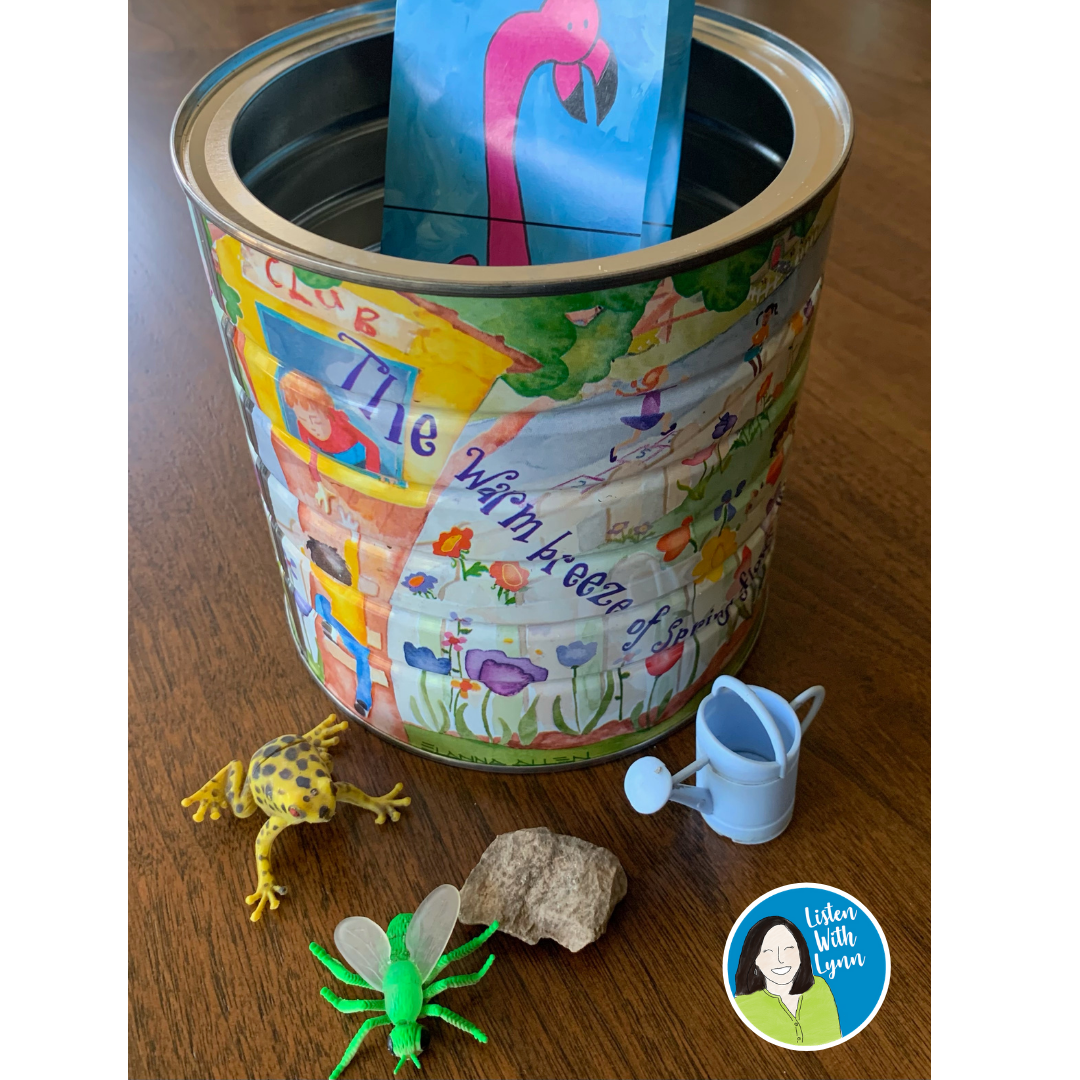
Summer in A Can is one of my classic LSL auditory verbal therapy activities that really get kids talking and sharing while focusing on time elements and past tense storytelling skills. Kids relish collecting and filling their can with memories and treasures and have no idea they are growing listening and spoken language skills.

You’ll Need an empty plastic or metal coffee can. If the child wants to make the can personal, they can wrap it in construction paper and decorate it.

Directions The child collects mementos from summer adventures and keeps them in their can. A seashell from the beach, a feather from a bird, a rock from a hike, pictures from a brochure, a ticket stub, a toy car that reminds them of a road trip, or anything to jog memories. If they begin early in the summer and they will have a can full of memories.

Summer in A Can is an easy and rich activity to build spoken language skills all summer long.


Summer Bucket Lists For Kids With Hearing Loss


One of my favorite end-of-the-school-year traditions in LSL auditory-verbal therapy is creating a Summer Bucket List with children who are deaf and hard of hearing. I typically introduce this activity when children finish kindergarten and continue it annually as long as they are receiving therapy. It serves as a wonderful bridge between the structure of the school year and the adventures of summer break.

While children are naturally excited about summer, a bucket list transforms that excitement into a listening and language-rich learning opportunity. Through conversation, planning, and goal setting, children practice important communication skills while dreaming about the experiences they hope to enjoy during the months ahead.

Why Create a Summer Bucket List?

Brainstorming summer activities encourages children to think creatively, share ideas, and engage in meaningful conversations with parents and therapists. The process supports a wide range of listening, speech, and language goals, including:

  • Learning and using summer-themed vocabulary

  • Categorizing activities, places, and experiences

  • Describing people, places, things, and events with relevant details

  • Expressing ideas, opinions, and feelings clearly

  • Listening to and building on others' contributions

  • Asking and answering questions

  • Participating in conversational turn-taking

  • Using clear speech and age-appropriate language

  • Making plans and setting goals

Most importantly, children discover that communication is a tool for connecting with others, sharing dreams, and planning meaningful experiences.

Summer Learning Happens Everywhere

Summer is often viewed as a time to relax and take a break from academics, and it should be! However, it is also filled with opportunities for natural language learning and auditory development.

Whether families are taking a big vacation, visiting local attractions, attending community events, exploring nature, reading at the library, or simply enjoying their backyard, every experience creates opportunities for listening, conversation, and language growth.

Parents often tell me how much they enjoy sitting down with their child to dream, plan, and talk about the activities they hope to experience together. The bucket list becomes more than a summer project—it becomes a roadmap for creating memories.

Guiding Parents and Children Through the Process

I like to begin with a simple bucket craft made from construction paper. As children assemble their bucket, we target listening and following directions skills through hands-on activities.

Next, I introduce printed shapes that represent various summer categories. Depending on the child's age and interests, these may include:

  • A swimming pool for water activities

  • A playground swing for outdoor fun

  • A minivan for day trips and vacations

  • Sunglasses for summer adventures

  • A library book for reading goals

  • An ice cream cone for favorite treats

  • A tent for camping experiences

  • A baseball for sports and recreation

As we look at each category, parents and children brainstorm together. Parents write down the child's ideas while we engage in rich conversations. I encourage children to explain why an activity is important to them, describe what they expect it to be like, and ask questions about activities they have never experienced before.

Building Language Through Conversation

The real value of the activity is not the completed bucket list—it's the conversations that happen along the way.

A simple goal such as "Go swimming" can become an opportunity to discuss:

  • Where they might swim

  • Who will go with them

  • What they need to bring

  • Safety rules

  • Favorite water activities

  • Previous swimming experiences

These discussions naturally expand vocabulary, strengthen auditory memory, and develop higher-level language skills.

Keeping the Learning Going All Summer

Once completed, the bucket list can be displayed at home and revisited throughout the summer. Families can check off activities as they are completed, add photos, and talk about favorite memories.

At the beginning of the next school year, the bucket list becomes a valuable conversation starter. Children enjoy sharing their experiences, practicing narrative language, and reflecting on the adventures they enjoyed.

Creating a Summer Bucket List is a simple activity, but it provides endless opportunities for listening, language, family connection, and joyful learning. Most importantly, it reminds children that communication opens the door to planning, experiencing, and sharing life's adventures. 

There are countless listening and language goals to target and include summer vocabulary, categories, describing places, things, and events with relevant details, expressing ideas and feelings clearly, listening to others, asking and answering questions, and speaking one at a time about the topics, building on others' talk in conversations, using clear speech and more. 

Summer is a time to relax but, also an opportunity for extended learning, building language, and adventures whether in the backyard or on a vacation. Parents and kids alike enjoy thinking, talking together, dreaming, and setting summer goals with a bucket list.

How to Guiding Parents and Children When Creating a Summer Bucket List
I begin with a bucket craft made simply from construction paper and target listening and following directions. Next, I introduce printed shapes of summer categories such as a swimming pool, a playground swing, minivan, sunglasses, library book, and more. The parents write the child's goals for each category as we brainstorm and talk together. 


☀️ Summer Bucket List Categories ☀️
Places I want to visit
Things I want to see
Things I want to try
Summer foods I want to eat
Crafts I want to make
Sunny day activities
Rainy day activities
Nature activities
Playground goals
Sporting goals
Water activities
Swimming goals
Books I want to read
Reading Goals
Camping activities
Carnival rides to try
Fourth of July activities
Beach activities
Summer music concerts
Celebrations to attend
Travel plans
Road trips
Fun with friends